01
Times from the source you choose
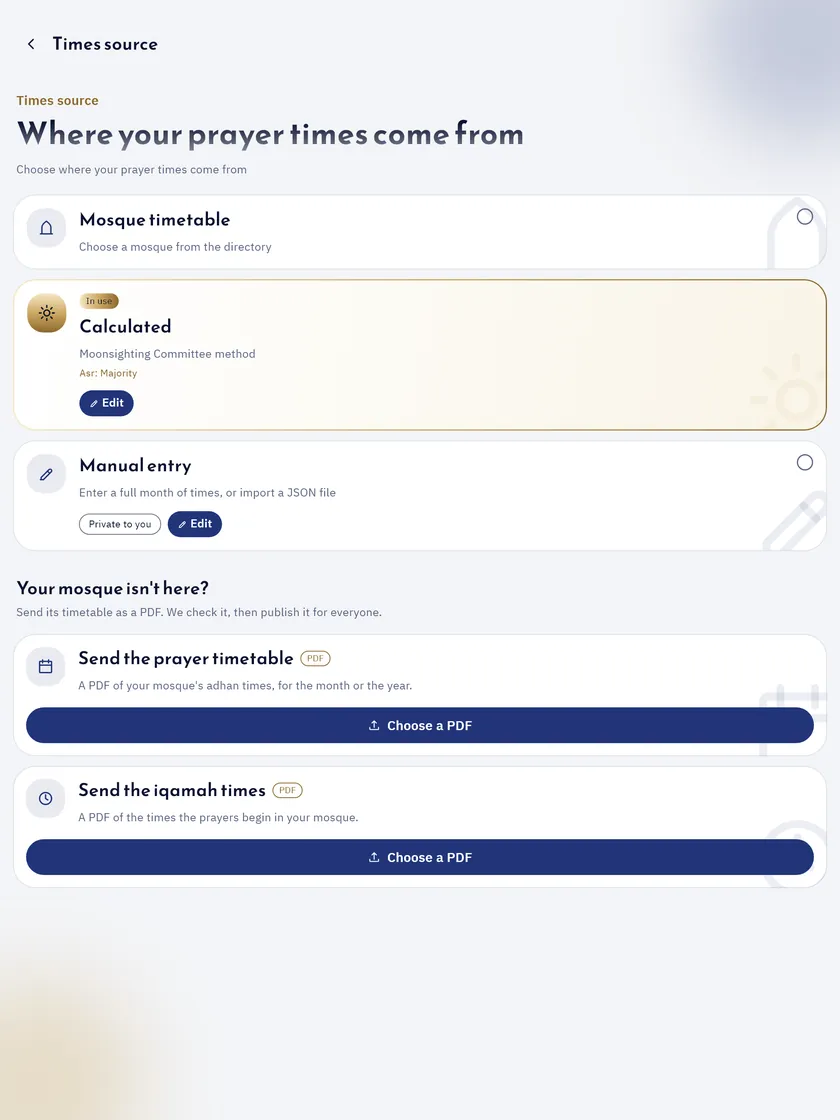
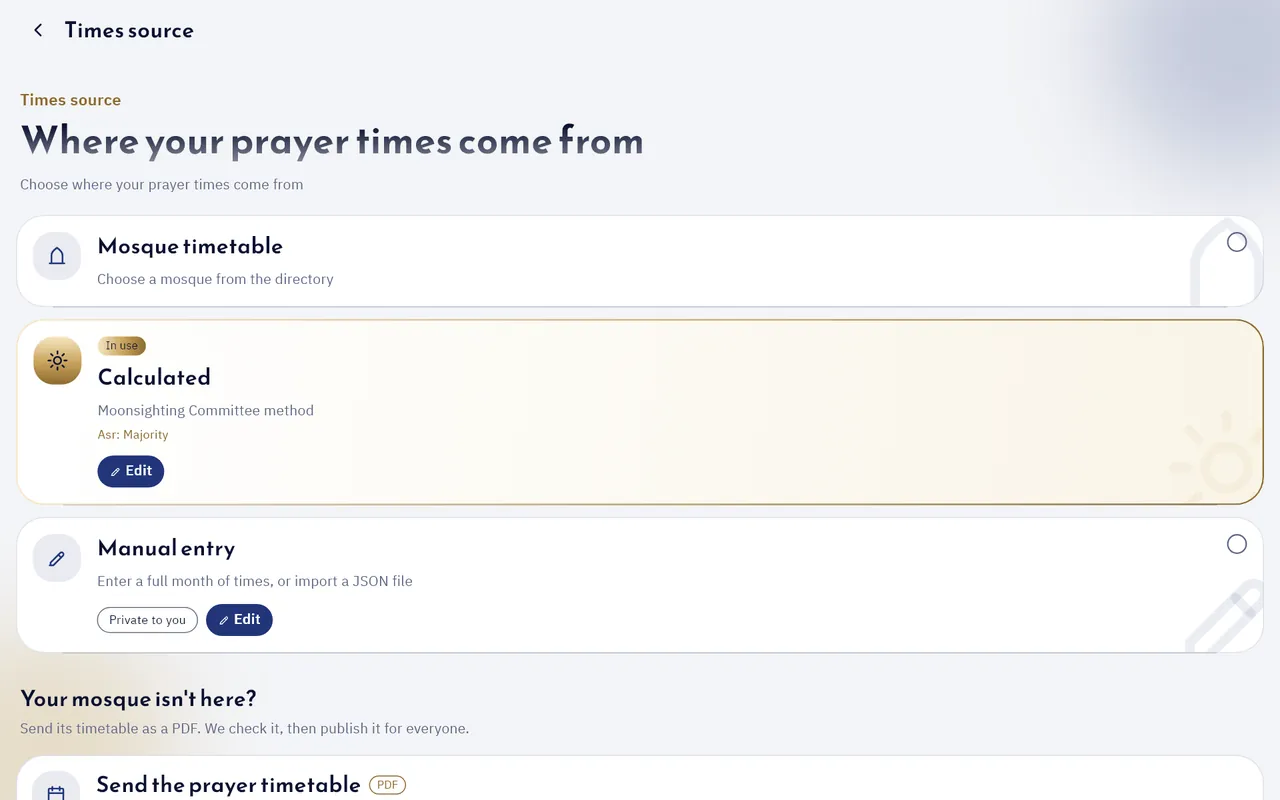
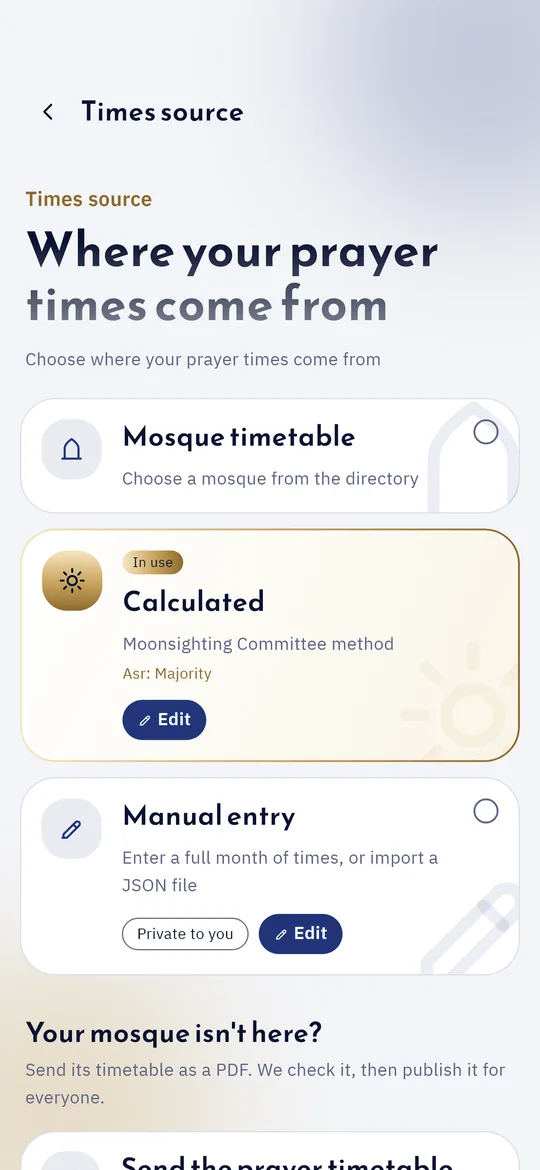
Calculated on your phone with recognised methods, offline; or your mosque's monthly timetable; or times you enter yourself.
CalculatedMosque timetableManual entry
 MOQUTAH
العربية
MOQUTAH
العربية
Prayer times wherever you are, from the source you choose
A free adhan app made for the sake of Allah, in Arabic and English, with no ads and no subscriptions. Accurate times for your town, the adhan on time even with the phone locked, the qibla, adhkar and a tasbih counter.
 Sponsored by LSIC
For Android 7 and later.
Prayer times & the Hijri calendar
Choose your city, then an astronomical calculation (the same method as the app) or a nearby mosque's own published timetable.
City coordinates © OpenStreetMap contributors, ODbL 1.0.
Features
MOQUTAH is made for Muslims everywhere, where times differ between mosques and calculation methods, and summer nights are short in the north. So the choice is yours.
Calculated on your phone with recognised methods, offline; or your mosque's monthly timetable; or times you enter yourself.
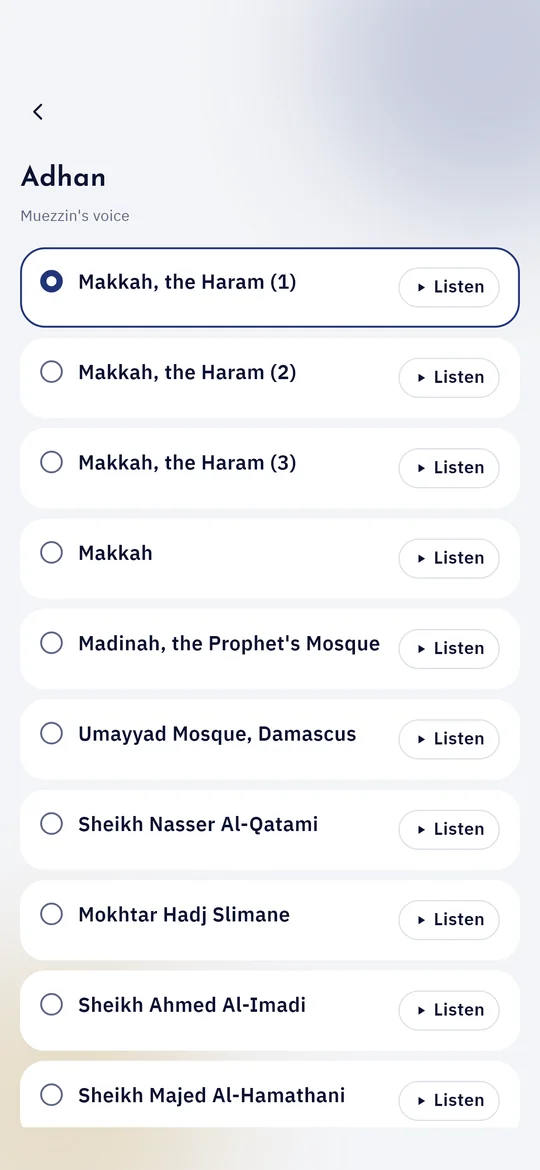
The adhan plays when the time comes, even with the phone locked, with reminders before the adhan and the iqamah, set for each prayer.
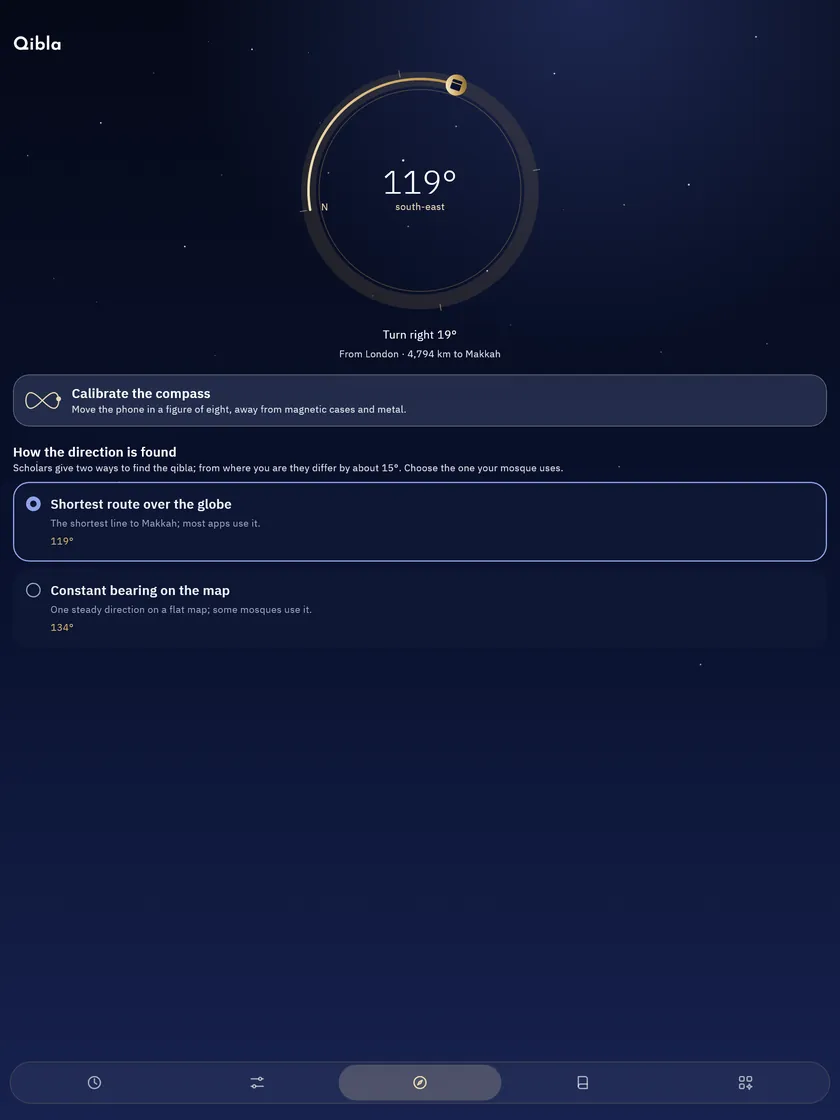
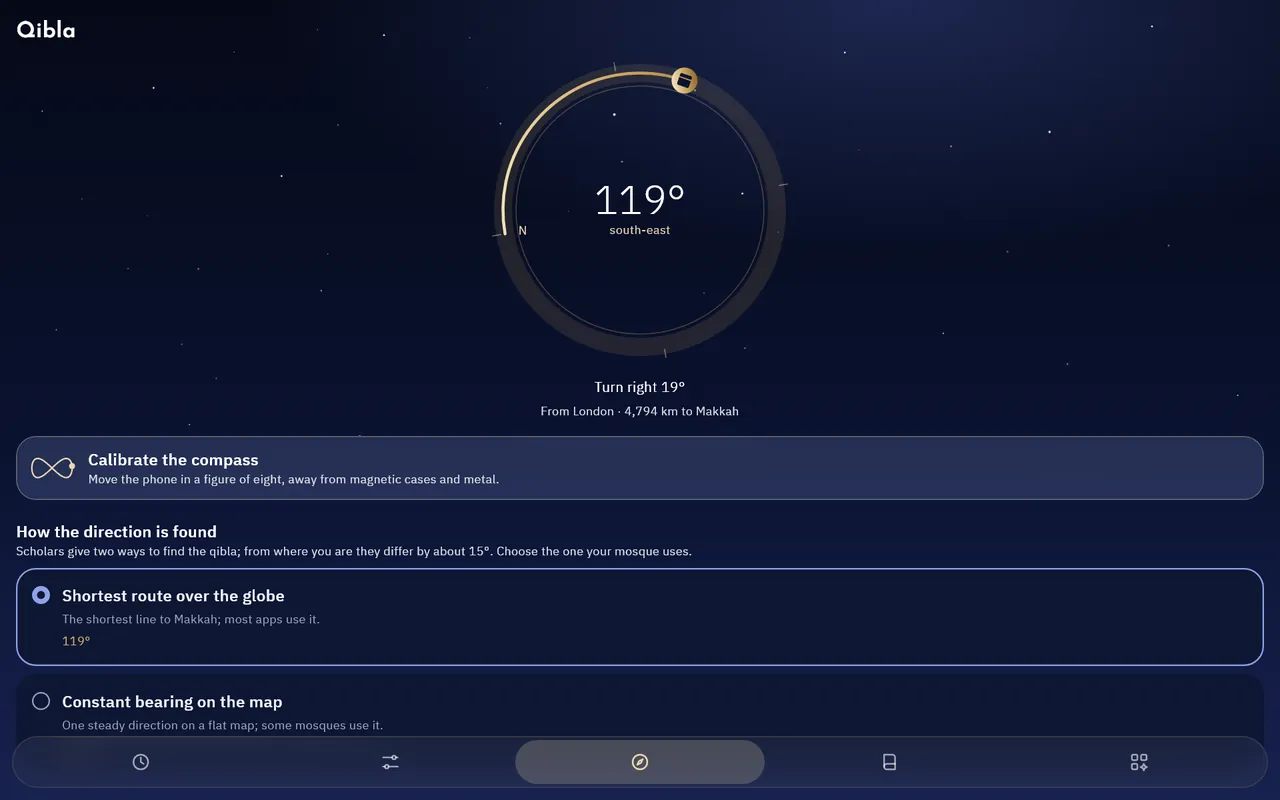
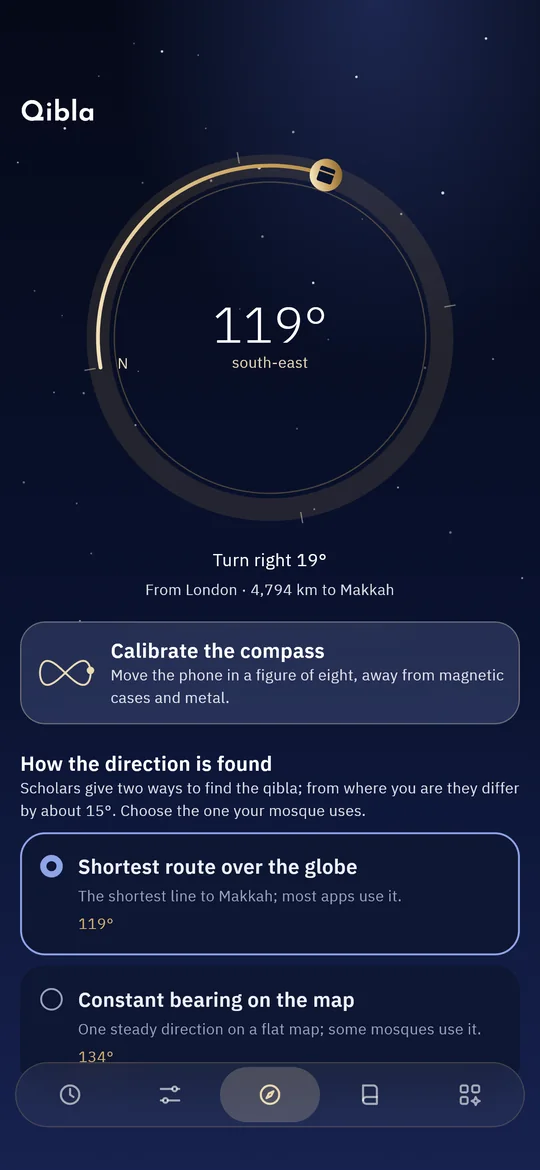
A compass that points to the Kaaba from where you are, corrected for magnetic declination, with calibration help.
Morning, evening, after-prayer and sleep adhkar and selected duas, with a counter and a reminder at the time you choose.
Istighfar, tasbih, tahlil and blessings on the Prophet ﷺ, each with its virtue from Sahih al-Bukhari and Muslim, with the hadith number.
Your location stays on your phone and is never sent. No accounts, no ads, no tracking.
Send your mosque's timetable as a PDF from the app; it is reviewed and added for others to use.
The whole app in both languages, with the digits you prefer.
A lasting charity: nothing is sold, and all we ask is your prayers.
Inside the app
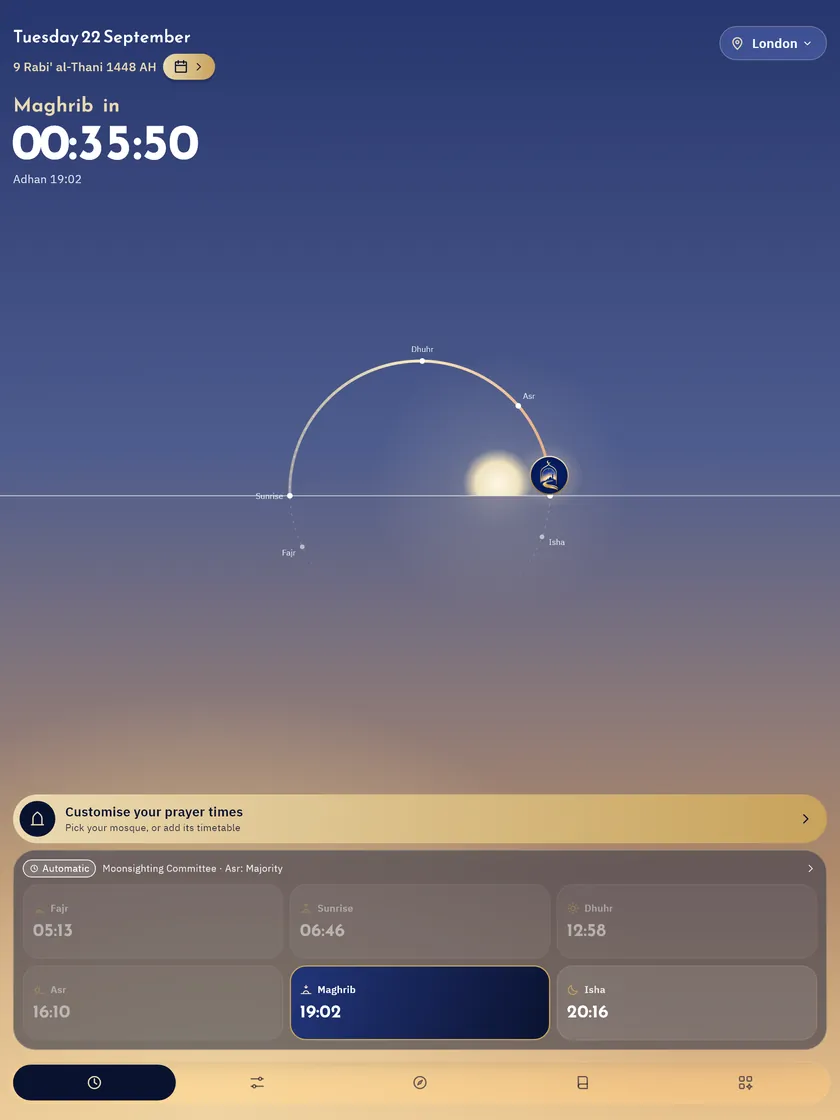
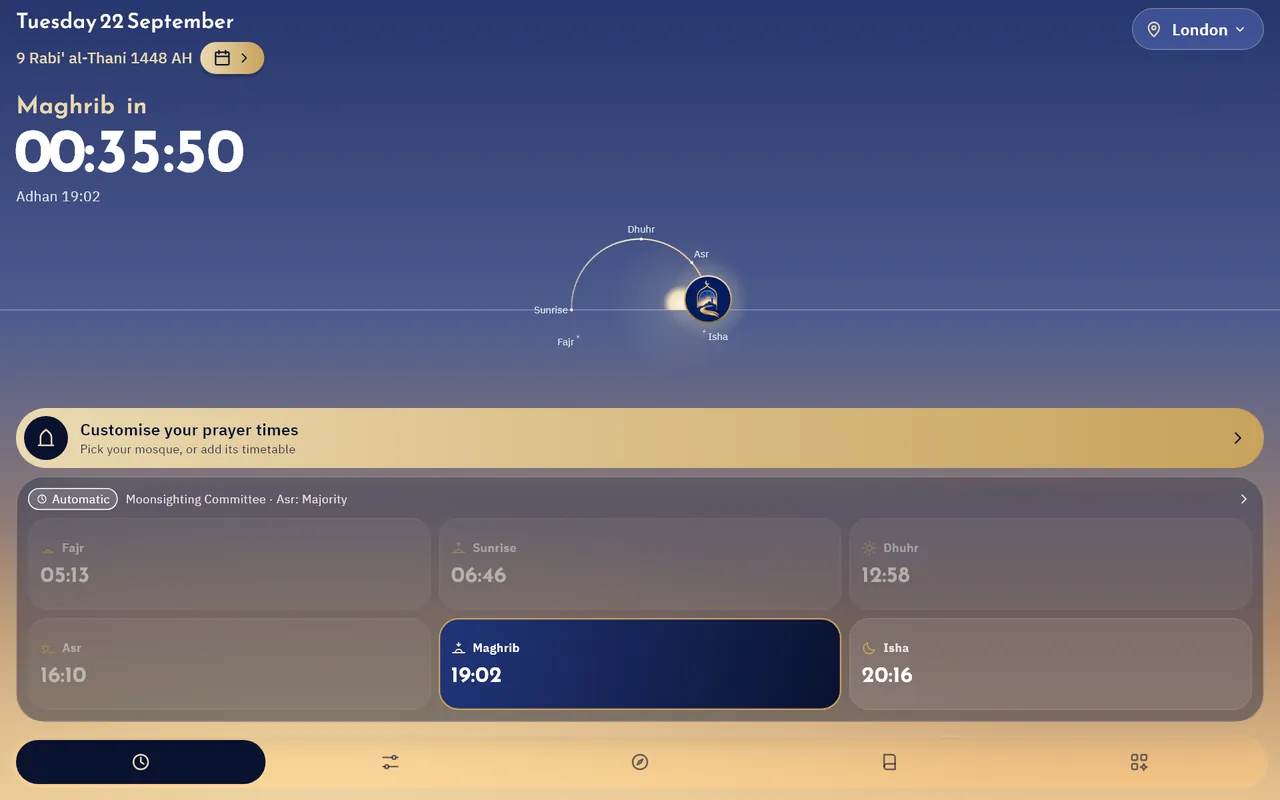
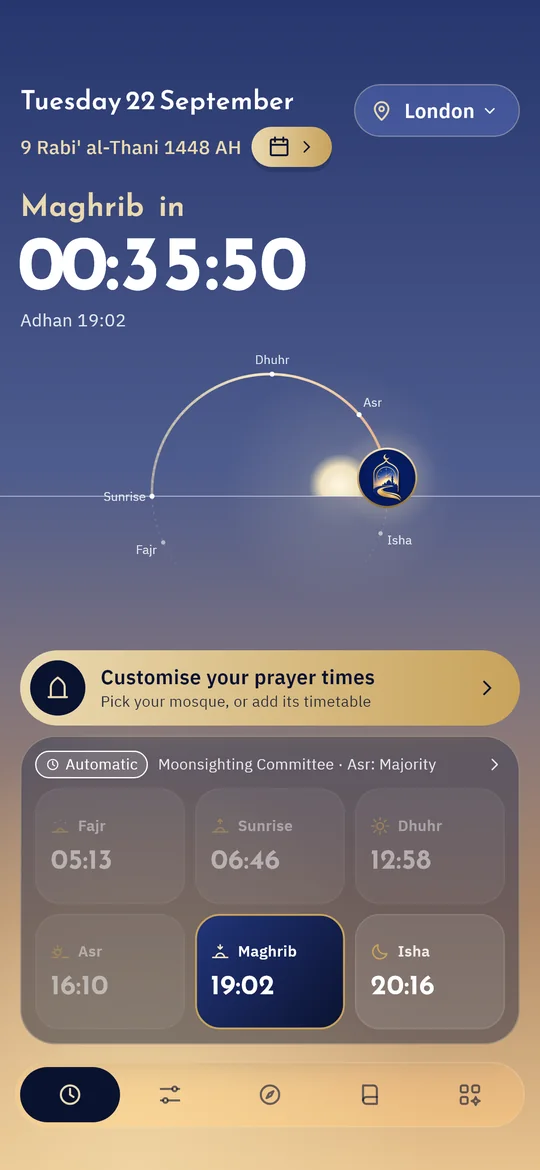
The home screen follows the colours of the sky through the day, and the logo travels the sun's path from Fajr to Isha.
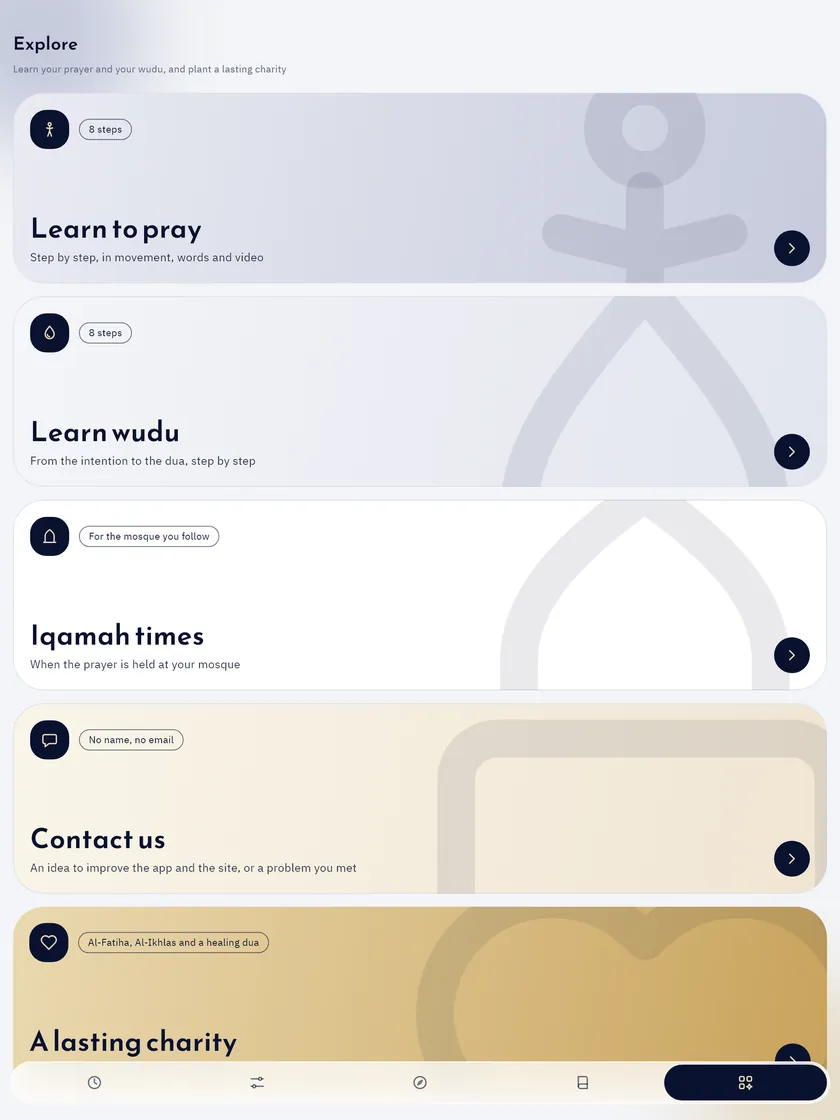
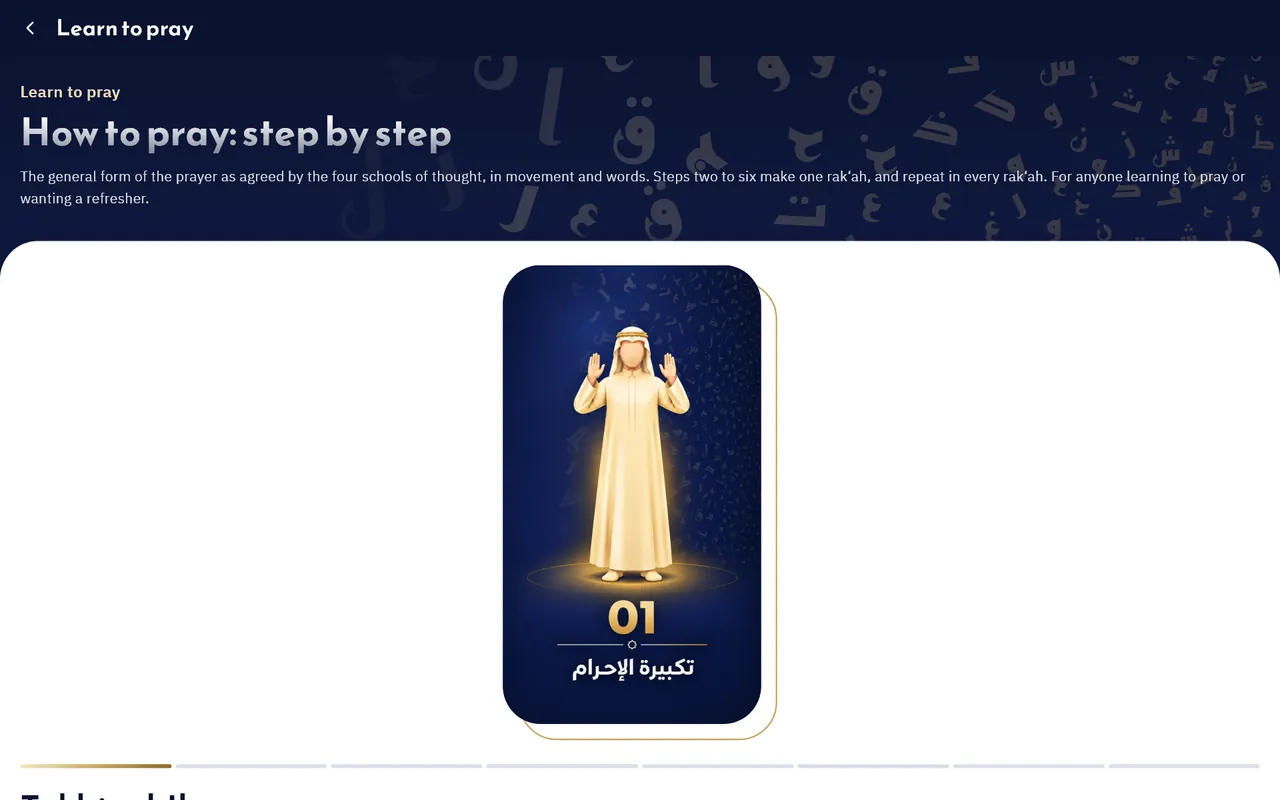
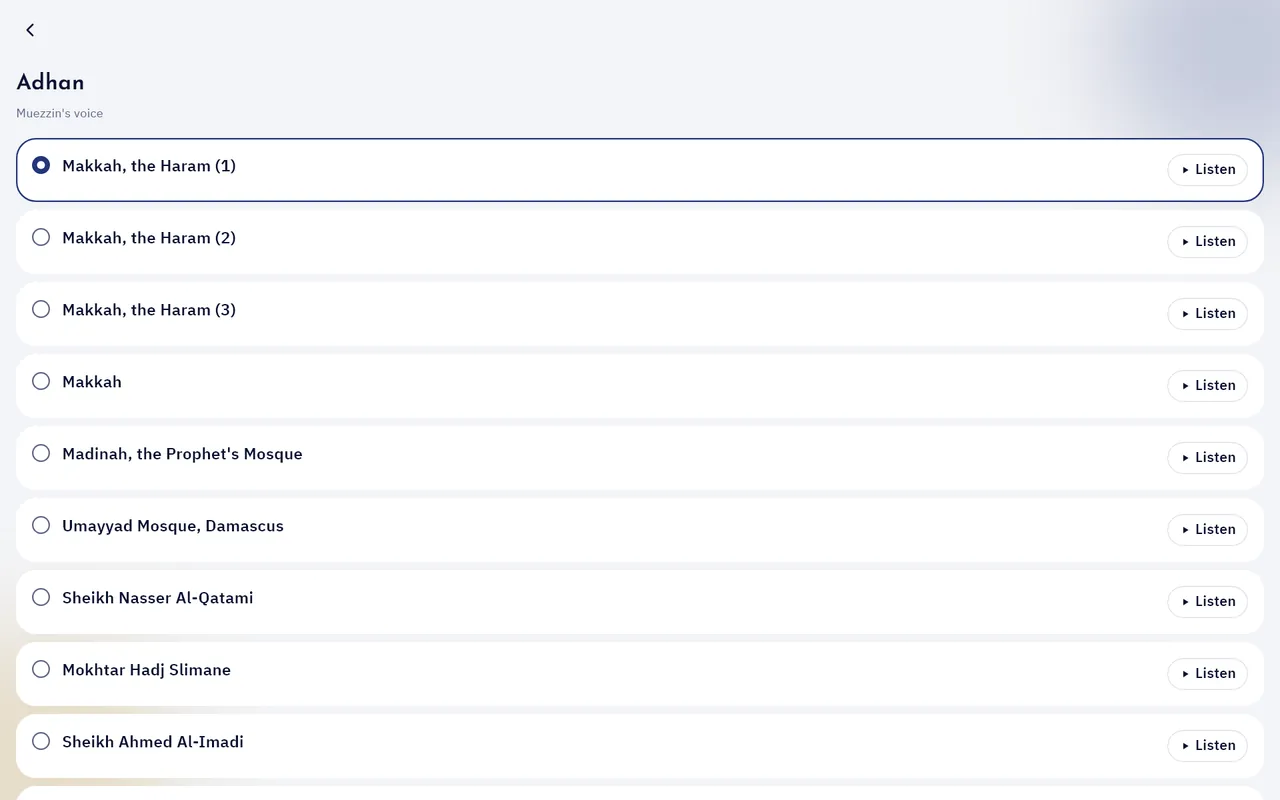
Learn to pray
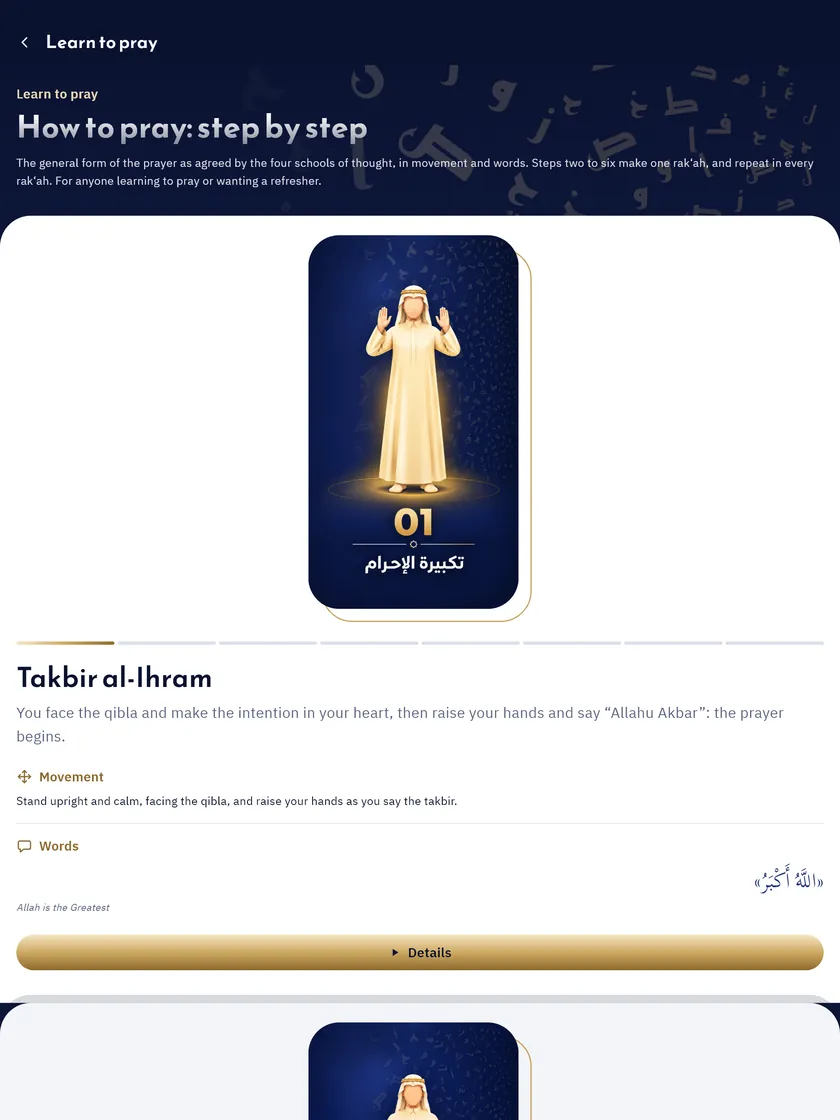
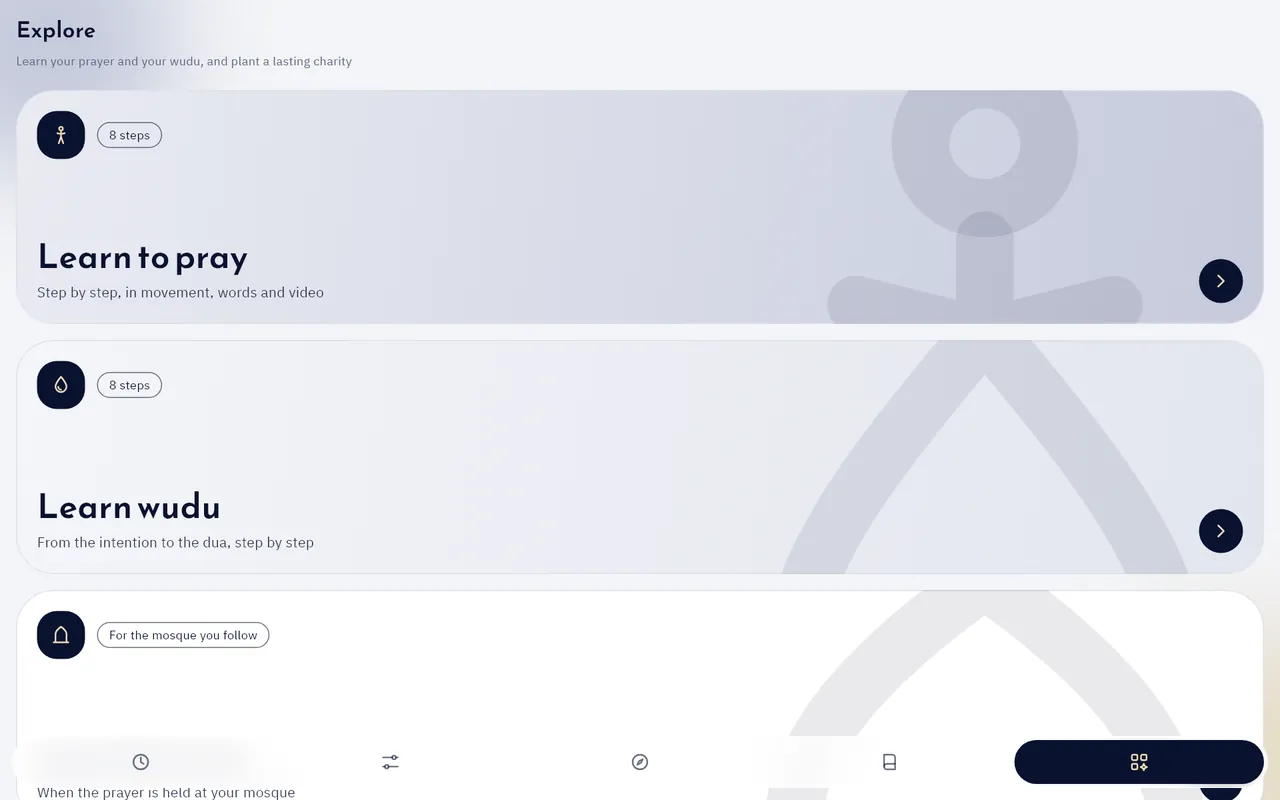
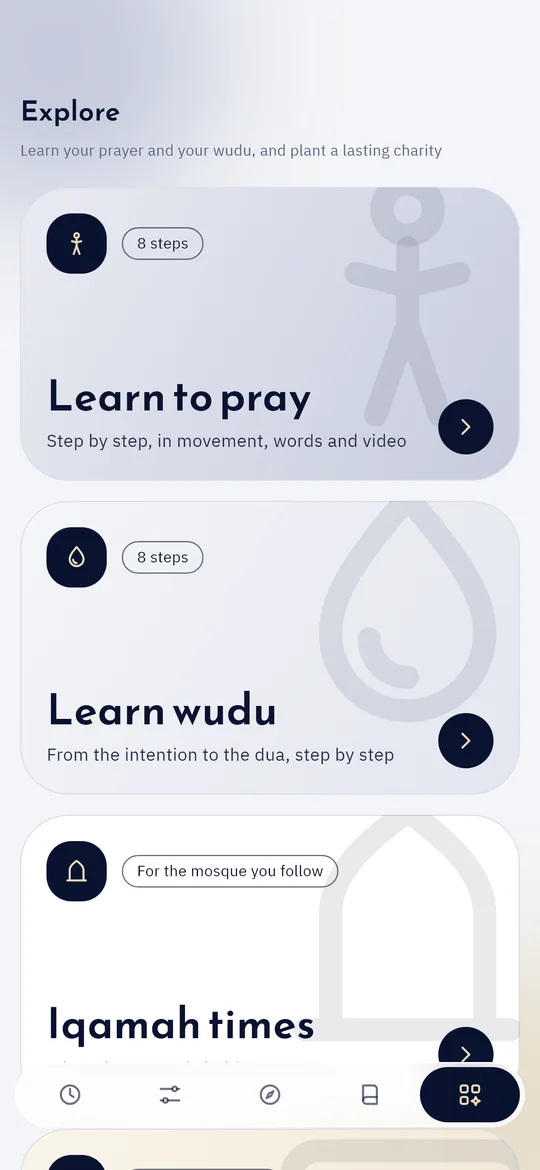
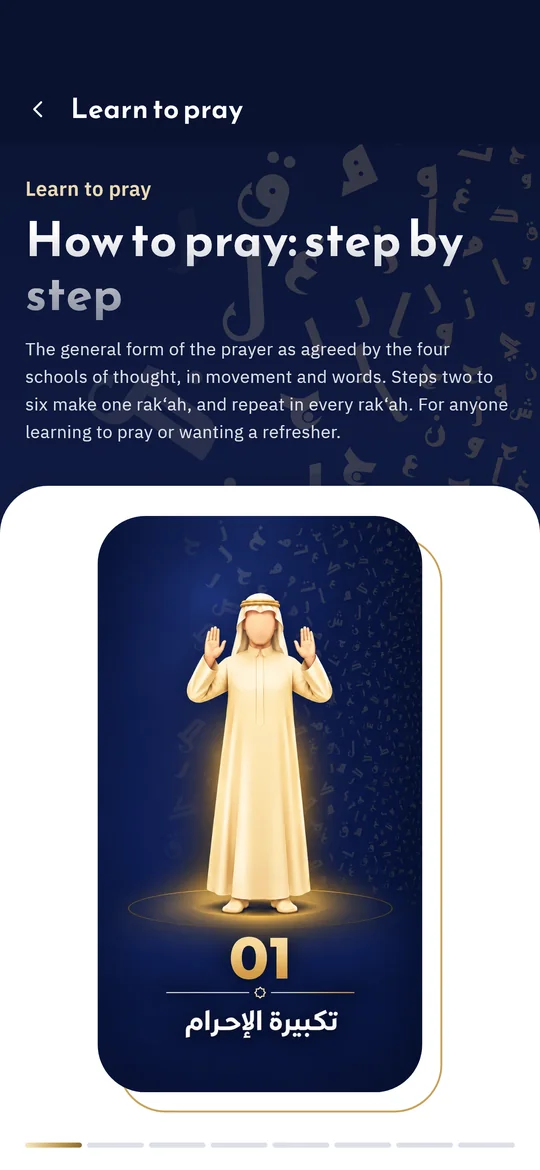
The general form of the prayer as agreed by the four schools of thought, in movement and words. Steps two to six make one rak‘ah, and repeat in every rak‘ah. For anyone learning to pray or wanting a refresher.
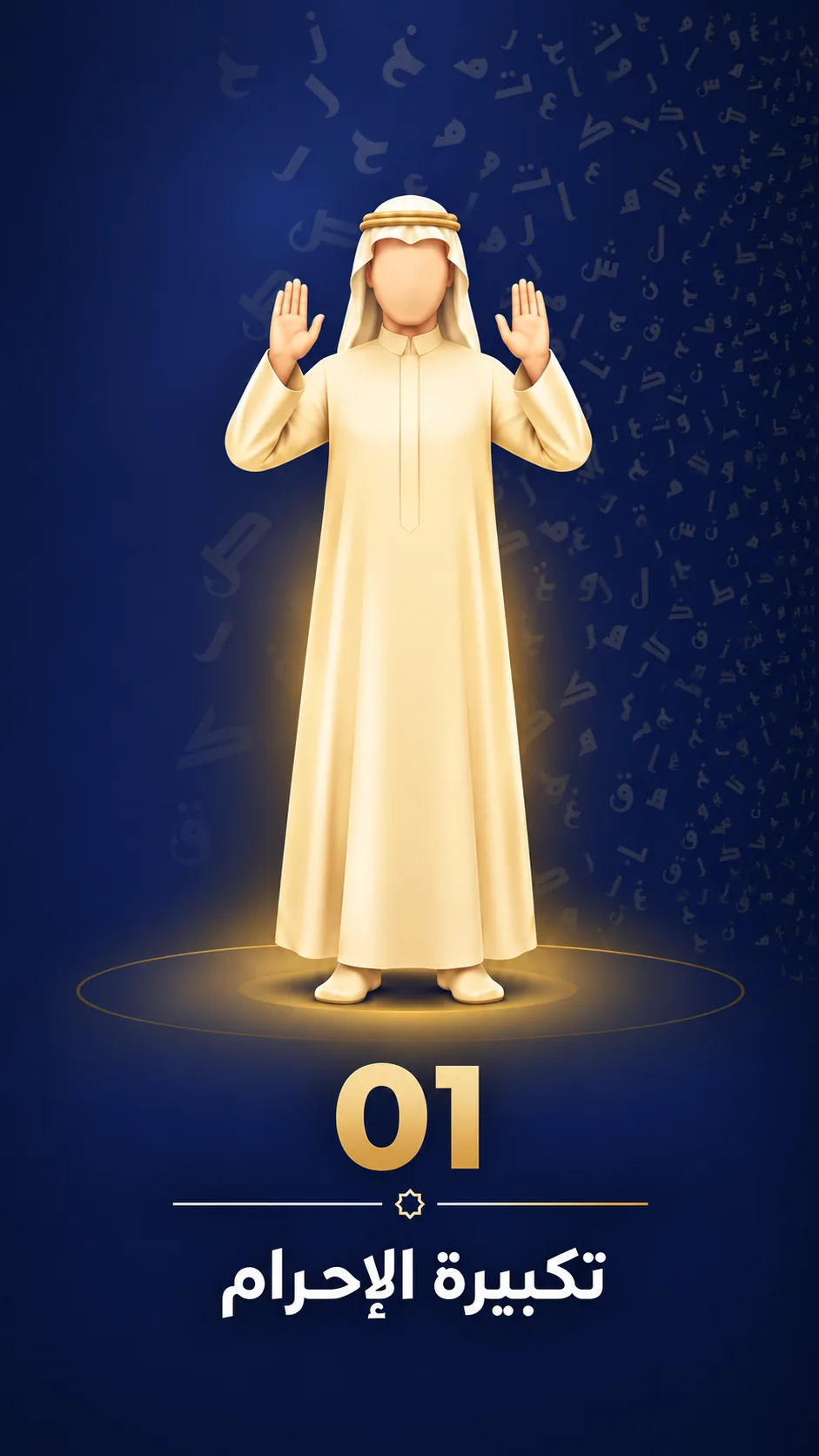
You face the qibla and make the intention in your heart, then raise your hands and say “Allahu Akbar”: the prayer begins.
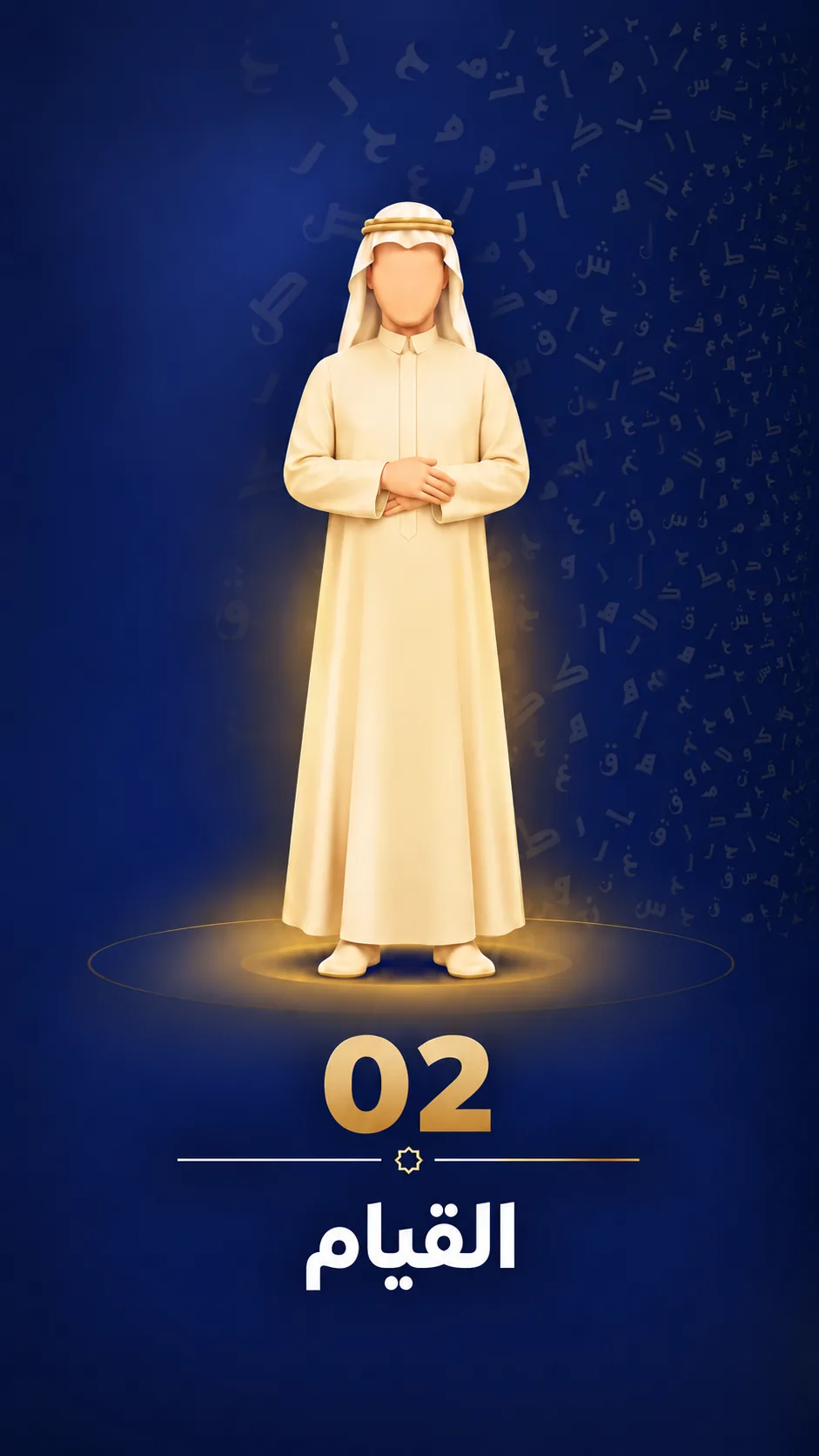
You place your hands on your chest or above your navel, or let them hang, as you are used to, and recite al-Fatiha and a surah.
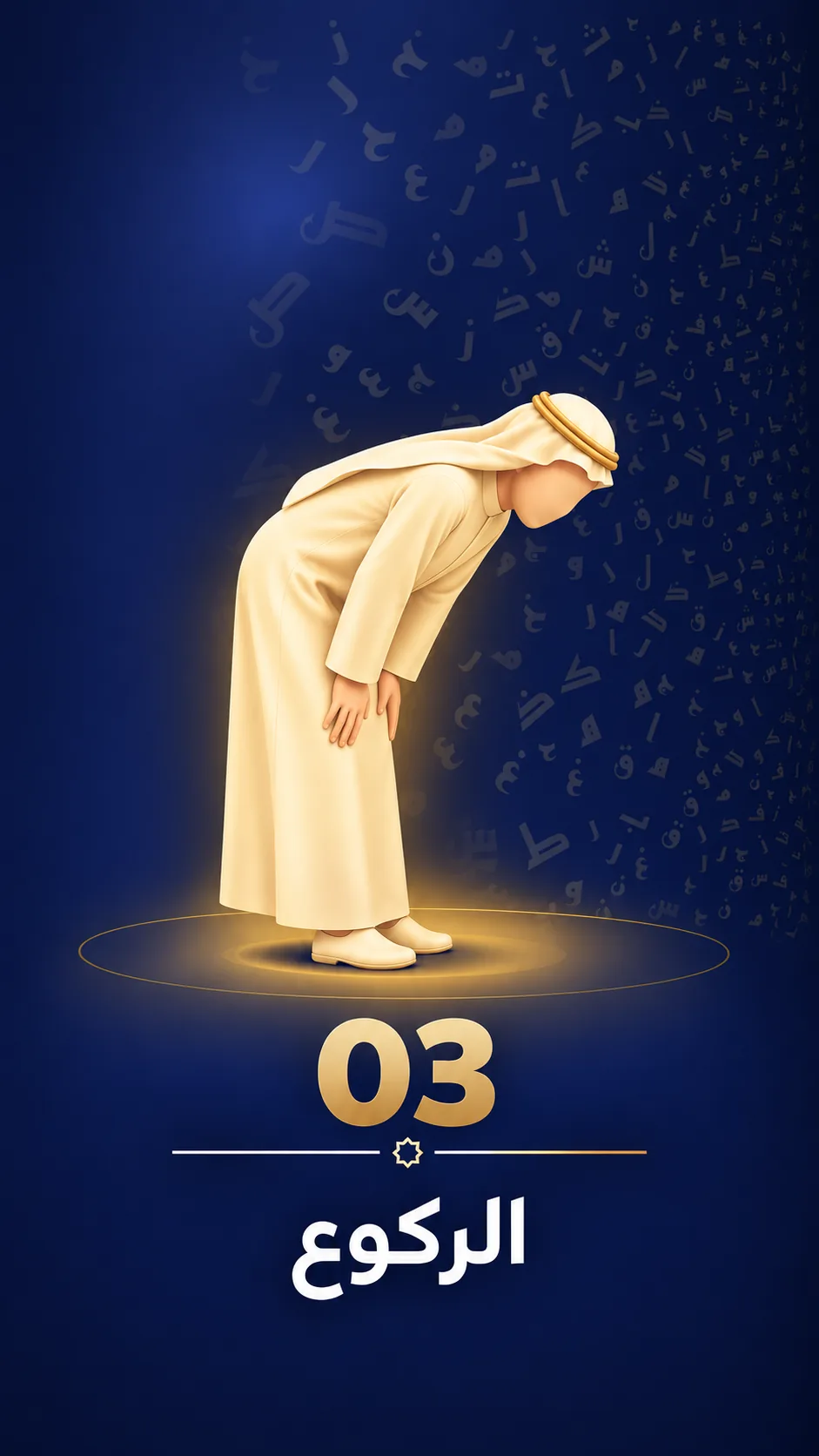
You say the takbir and bow, your back level and your hands on your knees.
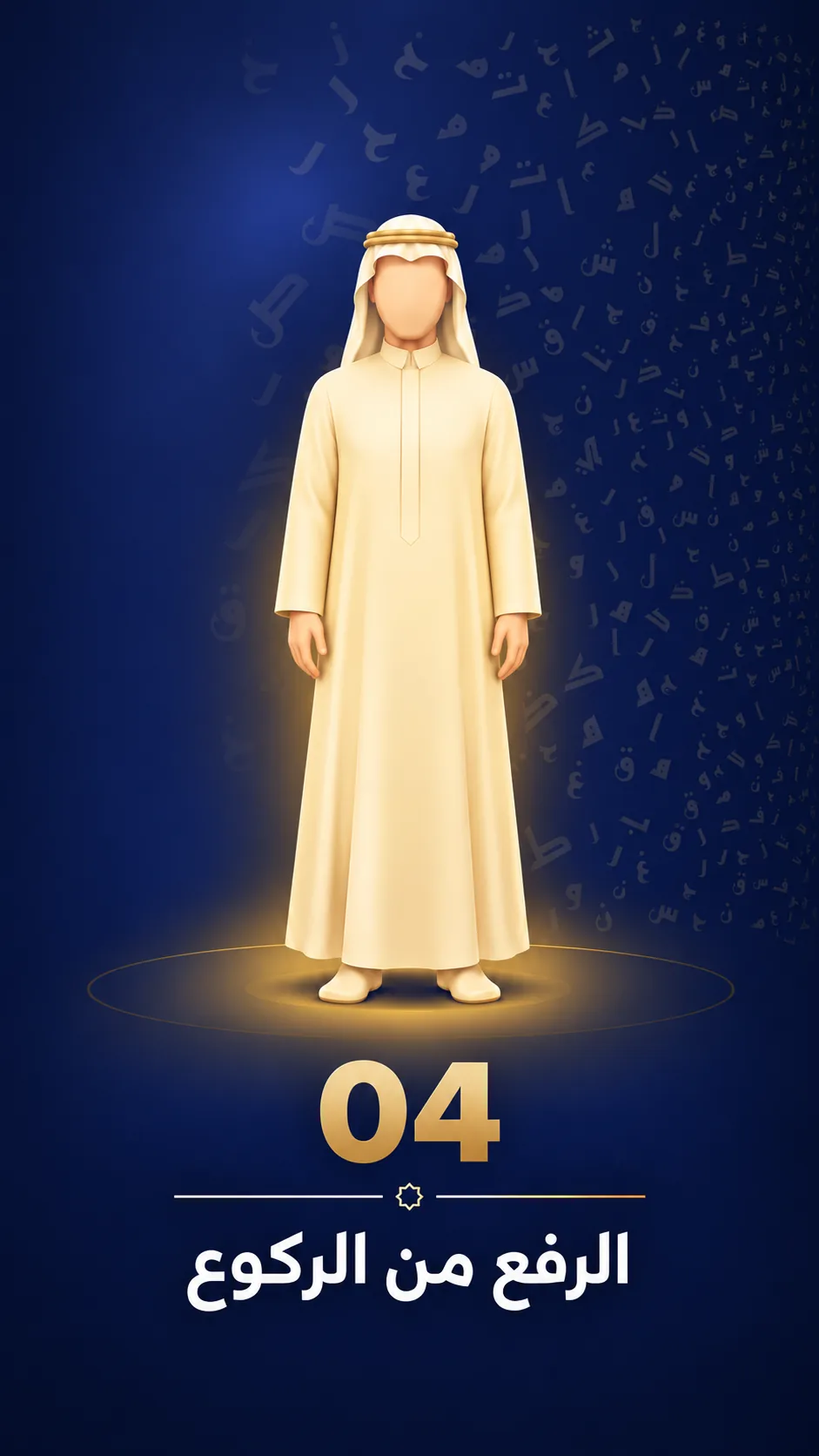
You rise from the bow and stand upright until every limb is settled.
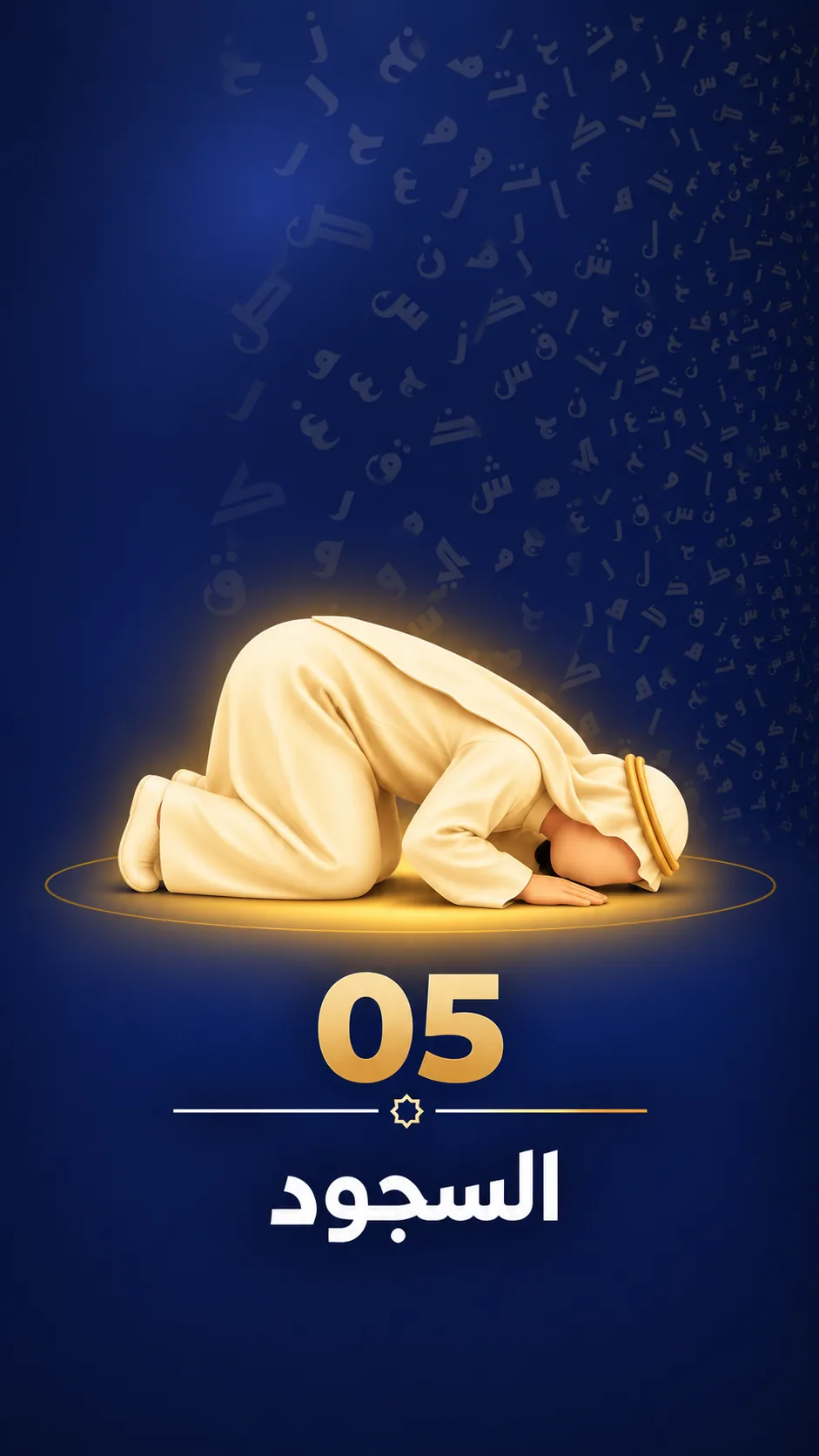
You say the takbir and prostrate on seven parts: forehead with nose, both hands, both knees and the toes.
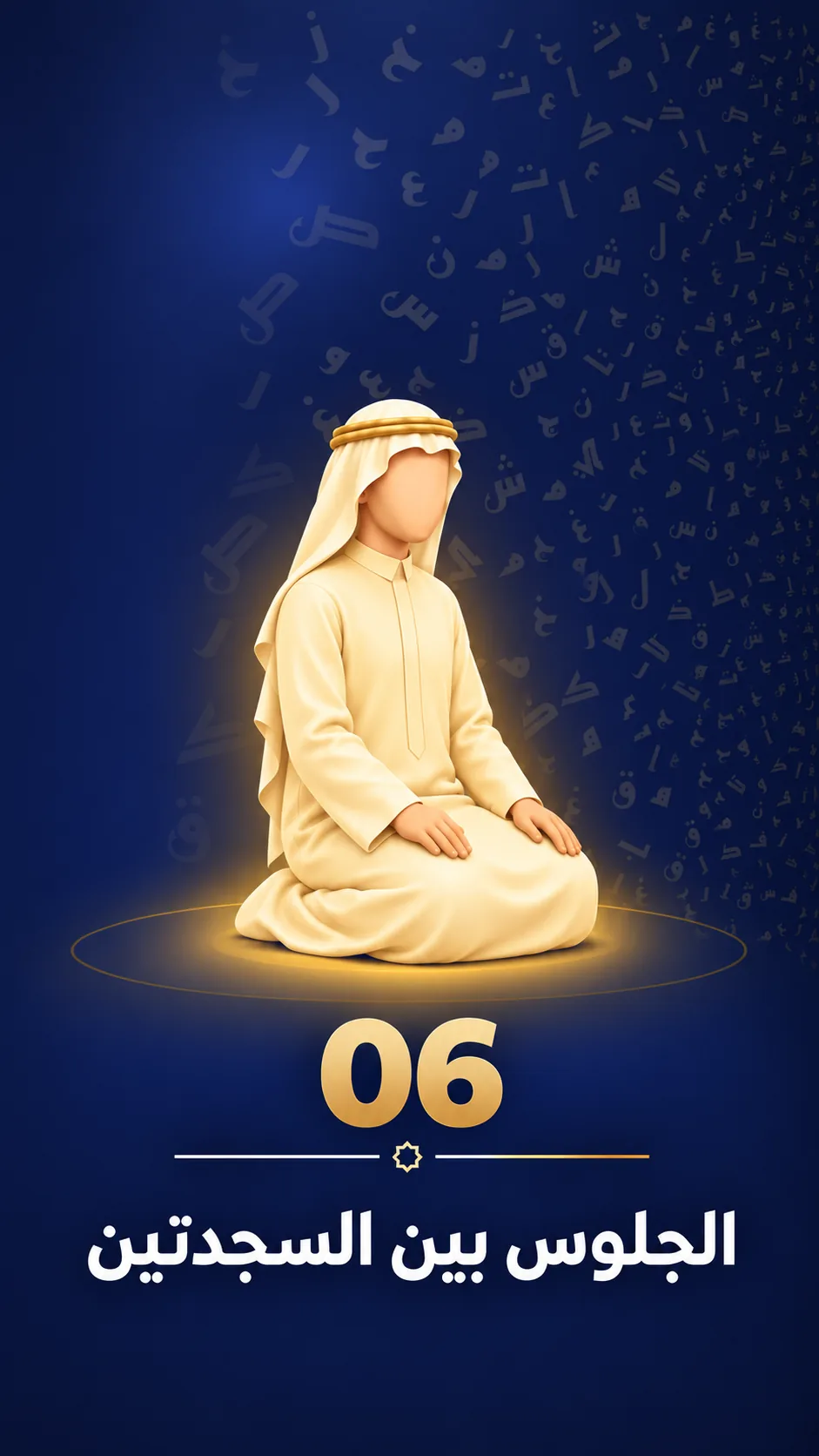
You rise with the takbir and sit still, then make a second prostration like the first.
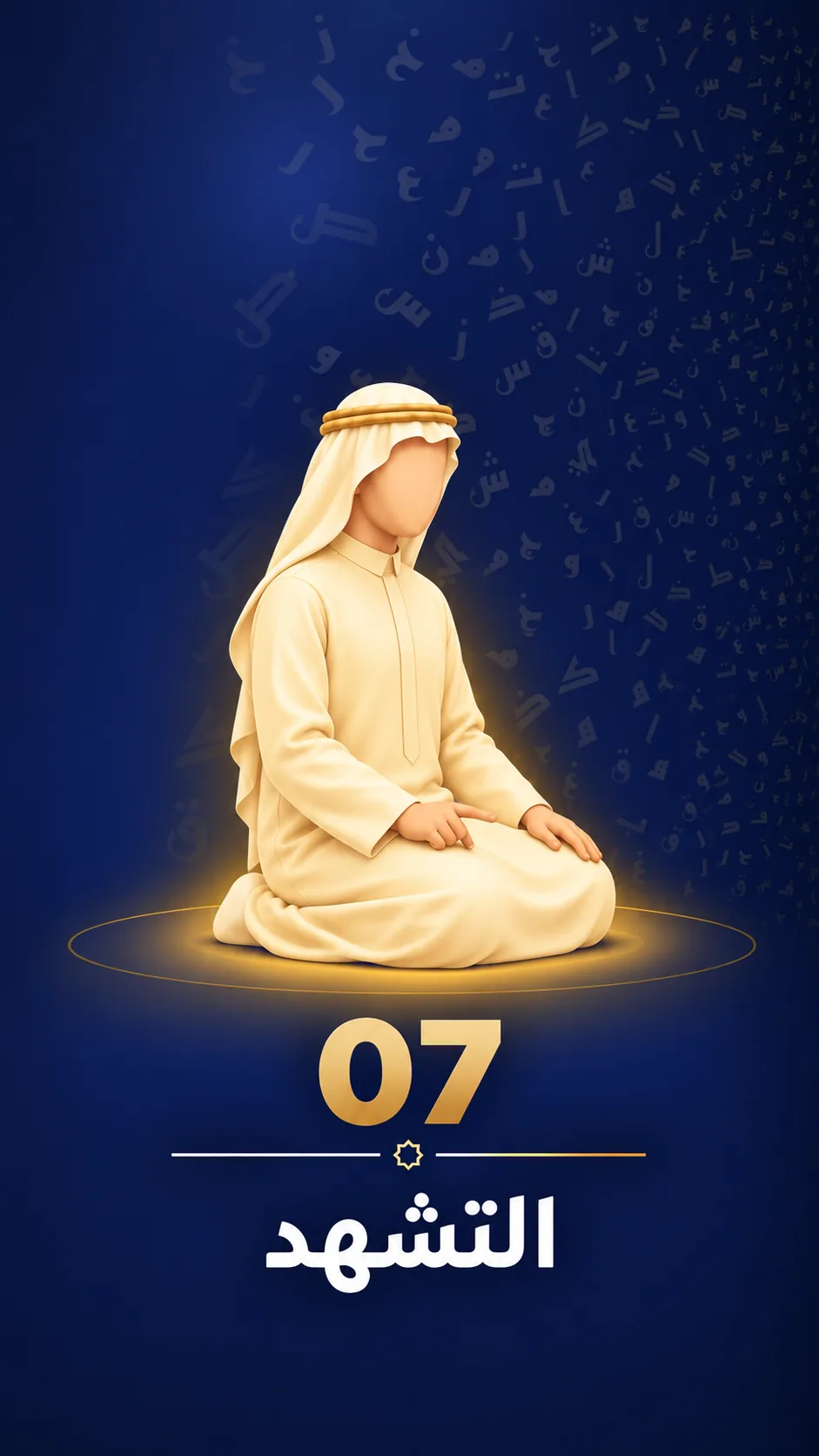
You sit after the second rak‘ah and at the end of every prayer, recite the Tashahhud and point with your index finger at the testimony of faith.
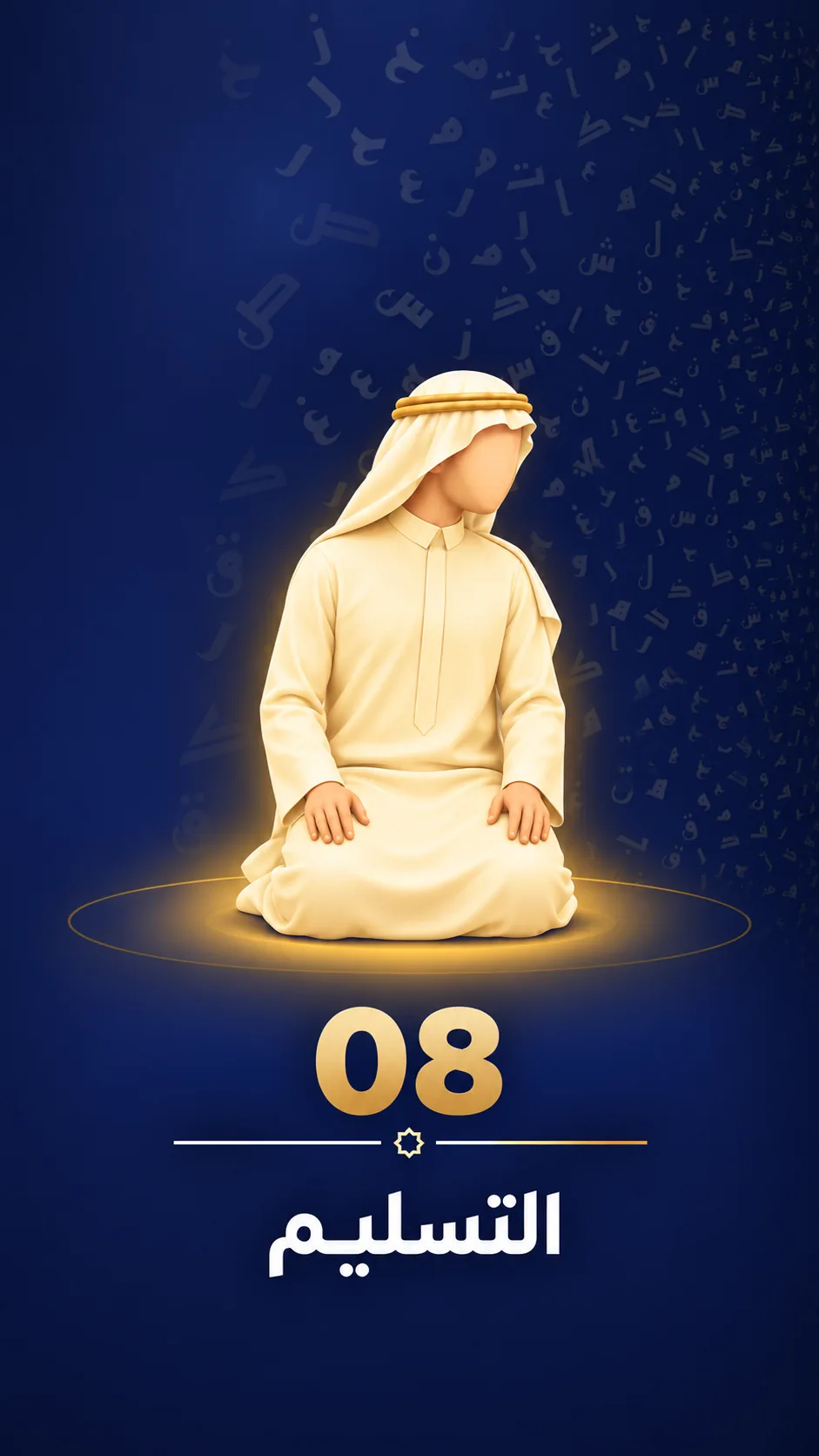
You end the prayer turning right then left.
Video
Videos that show the prayer with picture and sound. They load from YouTube only when you press one.
This guide shows what the four schools of Islamic jurisprudence (Hanafi, Maliki, Shafi'i and Hanbali) agree on in the general form of the prayer. They differ on a few details, including:
Follow what you were taught, or what the scholars in your country guide you to.
Learn wudu
The general form of wudu as the four schools of thought agree on it. The four limbs named in the Quran carry the mark of an obligation; the rest are sunnahs and good manners for most of them.
You intend wudu in your heart and say: bismillah.
Sit or stand calmly and turn on the water.
«بِسْمِ اللَّهِ»
In the name of Allah
DetailsYou wash both hands three times.
Wash your hands up to the wrists three times, running water between the fingers.
DetailsYou rinse your mouth, sniff water into your nose and blow it out, three times.
Take water in your right hand, swirl it in your mouth and spit it out, then sniff a little into your nose and blow it out with your left hand.
DetailsYou wash your whole face three times.
From the hairline to the bottom of the chin, and from ear to ear.
DetailsYou wash your arms up to and including the elbows, right then left.
From the fingertips up to and including the elbows, three times each.
DetailsYou wet your hands and wipe your head once, then your ears.
Pass your wet hands from the front of the head to the back and return them, then wipe your ears.
DetailsYou wash your feet up to and including the ankles, right then left.
From the toes up to and including the ankles, running water between the toes with the little finger of your left hand.
DetailsYou say the two testimonies when you have finished.
When you have finished, say the dua while you are still in your state of purity.
«أَشْهَدُ أَنْ لَا إِلَٰهَ إِلَّا اللَّهُ وَحْدَهُ لَا شَرِيكَ لَهُ، وَأَشْهَدُ أَنَّ مُحَمَّدًا عَبْدُهُ وَرَسُولُهُ»
I bear witness that there is no god but Allah alone, without partner, and that Muhammad is His servant and messenger
DetailsVideo
Videos that show wudu with picture and sound. They load from YouTube only when you press one.
The four schools agree on the four limbs named in the Quran. They differ on some details, among them:
Follow what you were taught, or what the scholars in your country guide you to.
Contact us
Write whatever you like: an idea that would improve the site or the app, or a problem you ran into. We read every message.
Your message reached us, and we will read it, God willing.
We read only what you write.
Support & donate
MOQUTAH has received support from the Leamington Spa Islamic Centre (LSIC), a registered UK charity working to build a mosque and community centre in Leamington Spa.

LSIC is working to build a modern mosque and Islamic centre serving the community: the five daily prayers, Quran and Arabic lessons, Islamic studies, a youth centre, a library, and funeral and nikah services.
Donate to the charity
Every gift, small or large, brings the mosque closer to completion and serves the community in Leamington Spa.
A lasting charity
This app is entirely free for the sake of Allah, with no ads, no subscriptions and no charge at all.
We read Al-Fatiha and Al-Ikhlas, intending by them mercy and forgiveness for our fathers, for all the departed of our families, and for all departed Muslims, and healing from every illness.
بِسْمِ اللَّهِ الرَّحْمَنِ الرَّحِيمِ ﴿١﴾ الْحَمْدُ لِلَّهِ رَبِّ الْعَالَمِينَ ﴿٢﴾ الرَّحْمَنِ الرَّحِيمِ ﴿٣﴾ مَالِكِ يَوْمِ الدِّينِ ﴿٤﴾ إِيَّاكَ نَعْبُدُ وَإِيَّاكَ نَسْتَعِينُ ﴿٥﴾ اهْدِنَا الصِّرَاطَ الْمُسْتَقِيمَ ﴿٦﴾ صِرَاطَ الَّذِينَ أَنْعَمْتَ عَلَيْهِمْ غَيْرِ الْمَغْضُوبِ عَلَيْهِمْ وَلَا الضَّالِّينَ ﴿٧﴾
In the name of Allah, the Most Gracious, the Most Merciful. All praise is due to Allah, Lord of all the worlds. The Most Gracious, the Most Merciful. Master of the Day of Judgment. You alone we worship, and You alone we ask for help. Guide us to the straight path, the path of those You have blessed, not of those who have earned Your anger, nor of those who have gone astray.
قُلْ هُوَ اللَّهُ أَحَدٌ ﴿١﴾ اللَّهُ الصَّمَدُ ﴿٢﴾ لَمْ يَلِدْ وَلَمْ يُولَدْ ﴿٣﴾ وَلَمْ يَكُنْ لَهُ كُفُوًا أَحَدٌ ﴿٤﴾
Say: He is Allah, the One. Allah, the Eternal Refuge. He neither begets nor is born, nor is there to Him any equivalent.
And please pray for the healing of every sick person:
اللَّهُمَّ رَبَّ النَّاسِ، أَذْهِبِ الْبَأْسَ، اشْفِ أَنْتَ الشَّافِي، لَا شِفَاءَ إِلَّا شِفَاؤُكَ، شِفَاءً لَا يُغَادِرُ سَقَمًا.
O Allah, Lord of mankind, remove the harm and heal, for You are the Healer. There is no healing but Yours, a healing that leaves no illness behind.
And for our friend's father, and for every sick Muslim.